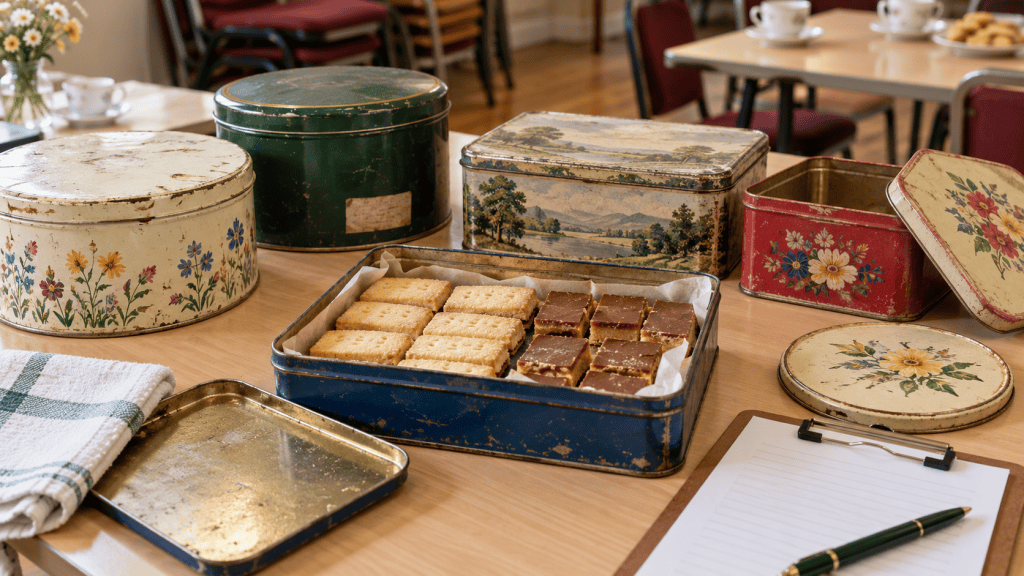
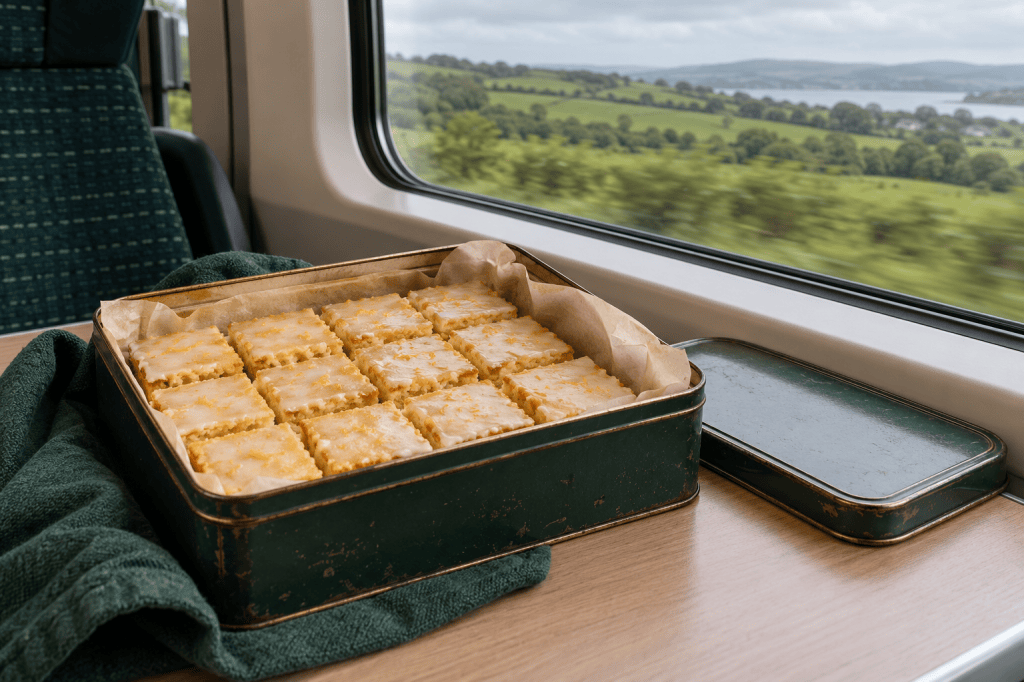
The biscuit tin occupies an important place in church hospitality.
It carries traybakes to meetings, stores shortbread after sales and protects Fifteens from circumstances against which cling film alone cannot prevail. It may remain in service for decades, long after the biscuits originally depicted upon its lid have ceased to be available.
Many tins possess histories which are only partially documented. Some move regularly between households and parish halls. Others disappear into vestry cupboards before emerging years later containing drawing pins, old keys or candles of uncertain liturgical purpose.
The Irish Ecclesiastical Traybake Society has therefore begun preparatory work on a Register of Approved Biscuit Tins.
Provisional Requirements
A tin proposed for regular parish service should ordinarily:
- close securely;
- possess a lid which belongs to it;
- have a flat and stable base;
- be free from sharp edges and significant rust;
- accommodate a useful number of portions;
- permit cleaning without loss of structural integrity;
- carry the owner’s name or another means of identification;
- fit inside the bag in which it is normally transported.
A tin need not be beautiful. Indeed, conspicuous beauty may make its eventual return less likely.
Identification
The owner’s name should be placed somewhere unlikely to become separated from the tin.
Loose paper labels are insufficient. Adhesive labels may be suitable, provided they have not already passed through several stages of illegibility. Permanent marker beneath the base remains acceptable, although the Society recognises that some inherited tins may bear the names of previous generations.
Where ownership is disputed, evidence may include:
- long possession;
- recognition by members of the Select Vestry;
- knowledge of a distinctive dent;
- the lid fitting without pressure or negotiation;
- an established history of carrying the same caramel squares.
Contents and Labelling
A tin bearing a picture of shortbread is not required to contain shortbread.
However, reasonable steps should be taken to prevent confusion where a container is used for sewing materials, electrical fittings, old photographs or documents relating to a previous parish sale.
When carrying food, the tin should be clean and suitable for that purpose. Allergen information should accompany the contents rather than being inferred from the decorative biscuits shown on the lid.
Provisional Classes
The Society is considering three classes of registration:
Class I — Regular Parish Service
For dependable tins in frequent use at services, meetings and sales.
Class II — Occasional and Seasonal Service
For larger or more decorative tins used principally at harvest, Christmas and other major gatherings.
Class III — Historic or Emeritus
For tins of recognised significance which are no longer expected to undertake routine transport.
No tin will be admitted to the register until it has travelled to at least one church event and returned with the correct lid.
Submissions
Members and interested parties are invited to submit photographs and accounts of notable biscuit tins.
Please include approximate age, dimensions, known history, customary contents and details of any unexplained period of absence.
The Society cannot adjudicate private ownership disputes. It may, however, issue a statement expressing the hope that the tin will be returned promptly and without further correspondence.



Leave a Reply