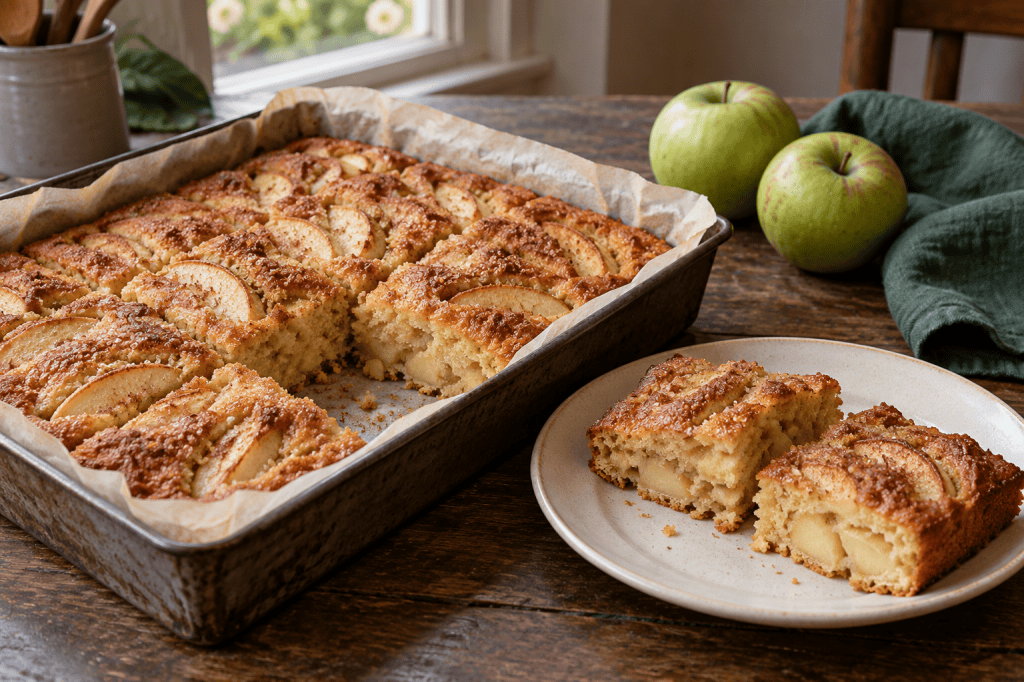
By the middle of August, the first signs of harvest begin to appear. Even where no field is visible from the church door, apples arrive in bags, boxes and quantities which suggest that somebody’s tree has exceeded its pastoral capacity.
The apple and cinnamon traybake is therefore a useful seasonal provision. It is substantial without being heavy, keeps well and may be cut into enough portions for a harvest supper, school reopening or committee meeting which has continued beyond its natural life.
This is an IETS provisional test recipe. It may not yet bear the IETS Approved stamp.
Provisional Apple and Cinnamon Traybake
Tin: 30 × 23cm, at least 4cm deep
Makes: 20 generous or 24 smaller pieces
Preparation: approximately 25 minutes
Baking: 45–50 minutes
Oven: 180°C conventional / 160°C fan / Gas 4
Ingredients
- 450g cooking apples, weighed after peeling and coring
- 1 tablespoon lemon juice
- 225g unsalted butter, softened, plus a little for the tin
- 225g light brown sugar
- 4 large eggs
- 300g self-raising flour
- 1 teaspoon baking powder
- 2 teaspoons ground cinnamon
- ¼ teaspoon fine salt
- 1–2 tablespoons milk, if required
- 2 tablespoons demerara sugar
Method
- Heat the oven to 180°C conventional / 160°C fan / Gas 4.
- Grease the tin and line its base and sides with baking parchment, leaving enough paper above two sides to help lift the cooled cake.
- Slice the prepared apples thinly and place them in a bowl. Add the lemon juice and toss gently. This limits browning while the cake mixture is prepared.
- Put the softened butter and light brown sugar into a large bowl. Beat for three to four minutes, until lighter in colour and noticeably fluffy.
- Add the eggs one at a time, beating well after each addition. If the mixture begins to curdle, add a spoonful of the measured flour.
- In a separate bowl, mix the self-raising flour, baking powder, one and a half teaspoons of the cinnamon and the salt.
- Fold the dry ingredients into the butter mixture. The batter should be soft enough to spread but not runny. Add one tablespoon of milk if it seems unusually stiff, followed by the second only if required.
- Spread slightly more than half of the batter evenly across the prepared tin.
- Arrange approximately two-thirds of the apple slices over the batter. Distribute them evenly and avoid creating a particularly deep gathering in one corner.
- Spoon the remaining batter over the apples and spread it carefully. It need not conceal every piece entirely.
- Arrange the remaining apple slices over the top.
- Mix the demerara sugar with the remaining half-teaspoon of cinnamon and sprinkle it evenly over the cake.
- Bake for 45–50 minutes, until the top is golden and a skewer inserted into an area of cake rather than directly through an apple comes out without wet batter.
- Leave the traybake in the tin for 15 minutes. Lift it out using the parchment and allow it to cool completely on a wire rack before cutting.
On the selection of apples
Cooking apples produce the clearest flavour and soften properly during baking. Bramley apples are particularly suitable, although any tart variety which cooks down well may be used.
Sweet eating apples can produce a milder cake and may retain a firmer texture. Where they are used, the quantity of sugar should not be increased merely because it is harvest.
Slice the apples thinly and as evenly as possible. Thick pieces may remain obstinately firm after the surrounding cake has finished baking.
Portioning
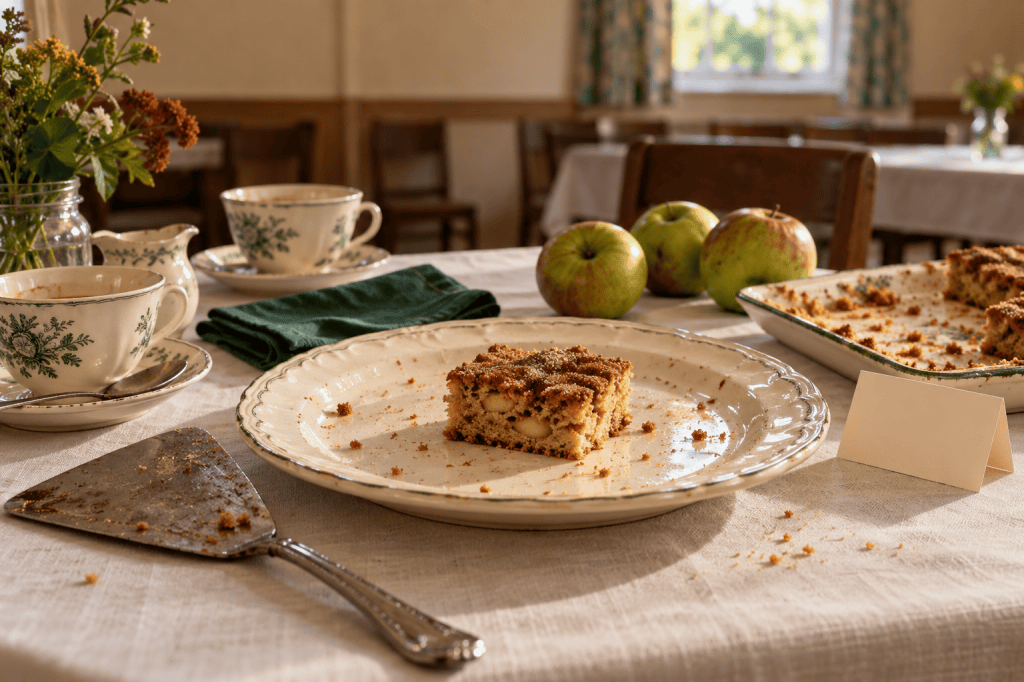
For 20 pieces, cut the traybake into five rows by four.
For 24 smaller portions, cut it into six rows by four. These are generally sufficient for a cake stall or a gathering at which several kinds of traybake will be offered.
The cake must be completely cold before cutting. When warm, it is tender and inclined to shed both crumbs and apple slices. A long, sharp knife produces the cleanest portions.
The irregular distribution of apple means that no two pieces will be identical. This is not a defect and should not be referred to a committee.
Storage
Store the cooled traybake in an airtight container for up to three days.
Because it contains a generous quantity of fresh apple, keep it somewhere cool. During warm weather, refrigeration is advisable. Allow refrigerated pieces to return towards room temperature before serving, as both the flavour and texture will improve.
Do not dust the cake with icing sugar until shortly before serving. The moisture from the apples will eventually absorb it, leaving evidence of good intentions but little else.
Freezing
The traybake may be frozen after it has cooled completely.
Cut it into portions and wrap them individually, or separate layers with baking parchment before placing them in a freezer-safe container. Freeze for up to two months.
Thaw the pieces while still wrapped, then uncover them once they have reached room temperature. This helps prevent condensation from settling upon the cake.
Transport
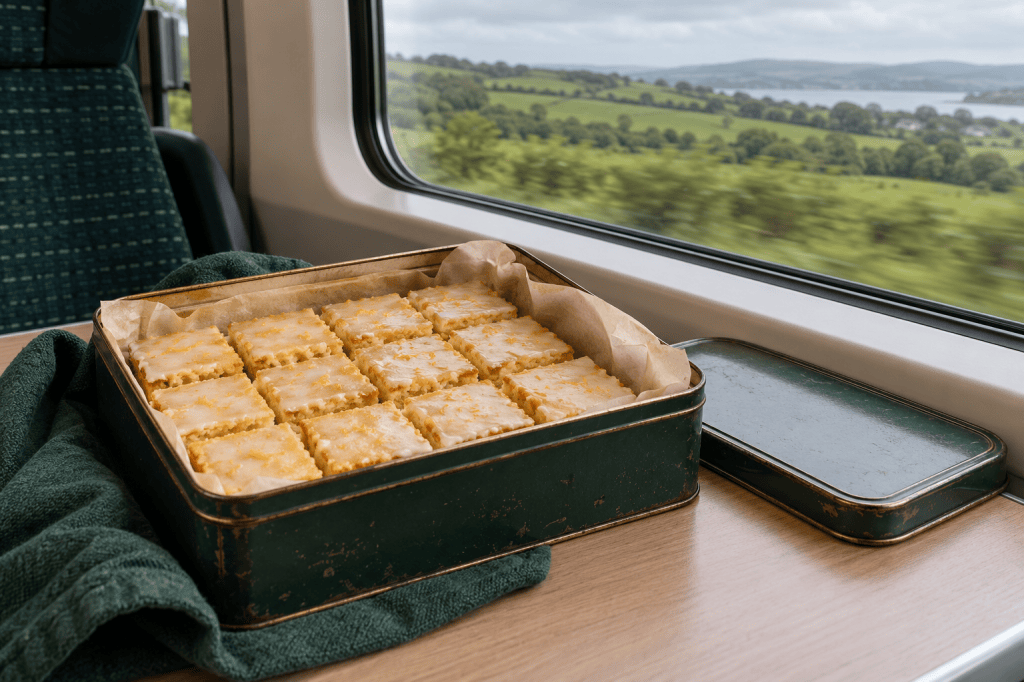
For the least eventful journey, leave the cake whole in its lined tin and cut it at the destination.
If it must be portioned beforehand, pack the pieces in a rigid container with parchment between any layers. The apple makes this a moist and forgiving bake, but it is not strengthened by being placed beneath three parish magazines and a portable hymn book.
Allergens
This recipe contains:
- wheat and gluten;
- milk;
- eggs.
Check all ingredient packaging where the traybake will be served publicly or to anyone with a food allergy. Cross-contamination warnings vary between brands.
Provisional assessment
Before approval can be considered, the Society must establish:
- whether the apple remains evenly distributed;
- whether the centre cooks before the edges become dry;
- whether 24 portions remain structurally defensible;
- whether the cake freezes and thaws without becoming damp;
- whether cinnamon is present in sufficient measure to be noticed without assuming control.
Until those matters have been examined, the recipe is commended for seasonal domestic testing.
A successful apple traybake should taste of the coming autumn while remaining entirely suitable for tea in August.



Leave a Reply