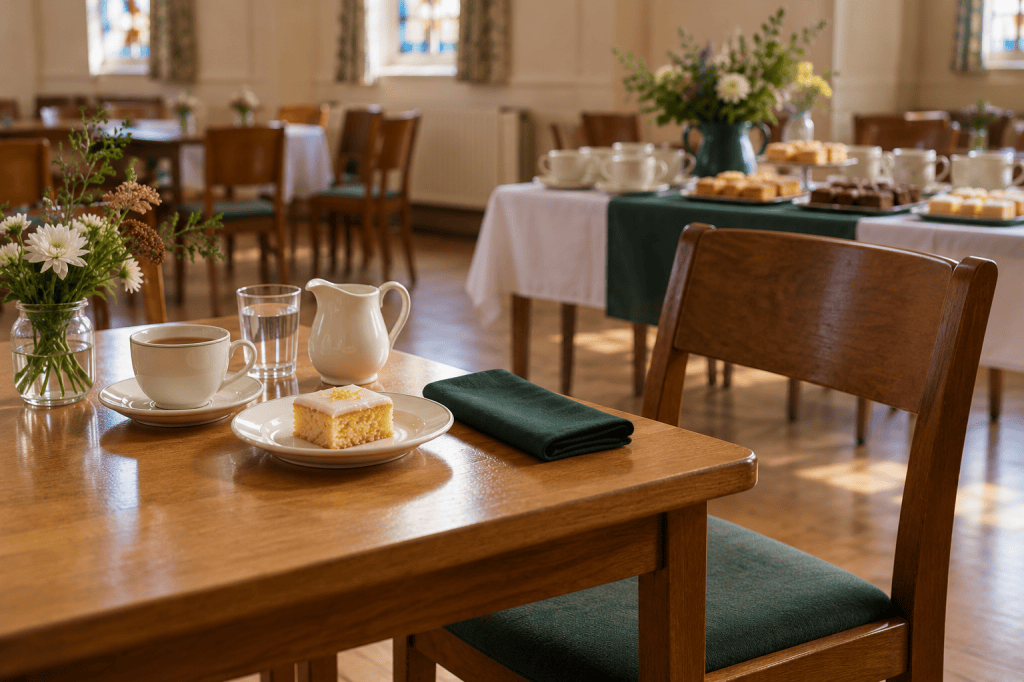
On Sunday, the Church keeps the feast of St Luke: evangelist, physician and companion of St Paul.
St Luke’s Day has long been associated with the Church’s ministry of healing. In many parishes, it is marked by prayer, anointing or the laying on of hands. People come carrying illness, grief, uncertainty and the ordinary weariness of living in bodies which do not always behave as requested.
Healing is not always the same as cure. Prayer does not require us to pretend otherwise. Sometimes healing is found in strength to continue, in peace amid uncertainty, in skilled medical care or in the discovery that suffering need not be carried alone.
And sometimes, after the service, somebody puts on the kettle.
Hospitality after prayer
The refreshments following a healing service are not merely an administrative conclusion.
To move from prayer into a room where a chair has been found, tea is offered and nobody is hurried away can be part of the same ministry. Care continues through ordinary gestures: remembering how somebody takes their tea, carrying a plate to a person who cannot stand for long, or making space for conversation which does not require an immediate answer.
The tea urn is not a sacrament. It may nevertheless assist the work of grace.
The traybake has a particular usefulness here. It can be prepared in advance, served without ceremony and divided into portions small enough for a person who wants only a little. It asks no explanation from the person receiving it.
Preparing the table
Hospitality after a healing service should be calm, accessible and unforced.
Consider whether:
- there are enough chairs and tables;
- people with limited mobility can reach the refreshments;
- tea can be brought to those who need to remain seated;
- mugs are light enough to hold comfortably;
- water and caffeine-free drinks are available;
- allergen information is clear;
- the room permits quieter conversation;
- those who wish to leave immediately may do so without embarrassment.
A crowded table may look generous while remaining difficult to use. Leave enough space between plates for somebody to serve themselves without reaching across hot drinks or moving three other dishes.
Napkins should be readily visible. Small plates are preferable to expecting a person to balance a traybake upon a saucer already occupied by a cup.
Suitable bakes
This is not the occasion for a traybake which demands physical determination from the person eating it.
Very hard bases, unstable towers of icing and portions requiring the jaw strength of an archdeacon should be avoided.
Good choices include:
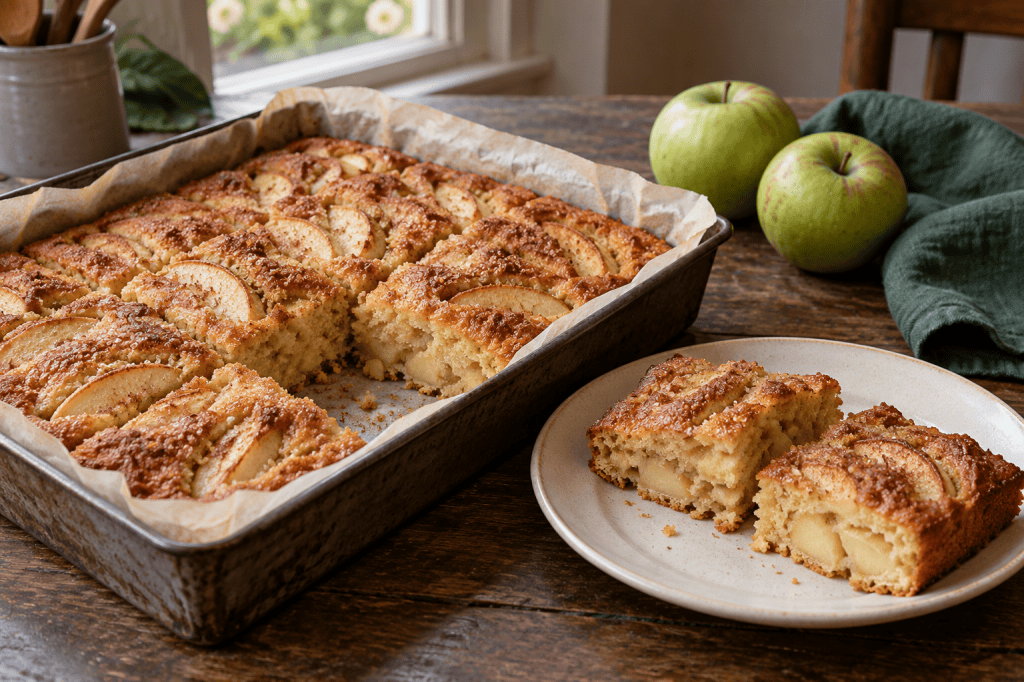
- apple or pear traybake;
- lightly iced lemon squares;
- soft ginger cake;
- shortbread cut into modest pieces;
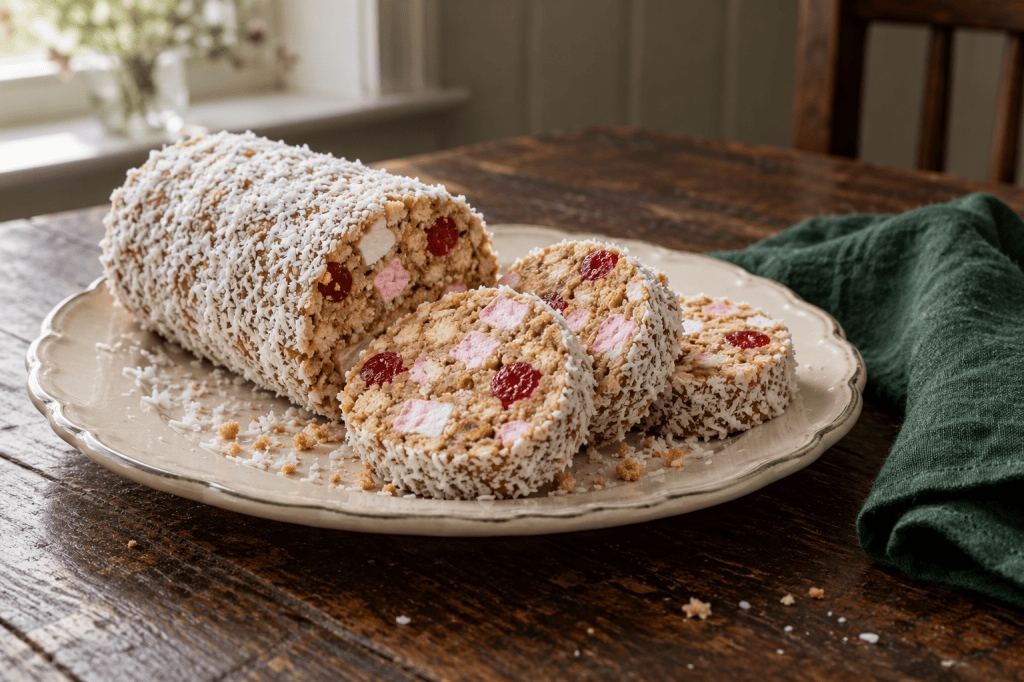
- a properly set refrigerator bake;
- a plain sponge which does not shed half its substance upon the floor.
Cut portions smaller than usual and arrange them with enough room to be lifted easily. Additional pieces may always be taken. Returning half a large square to the communal plate presents greater difficulties.
Where possible, provide at least one simple option. A person managing nausea, fatigue or the effects of medication may welcome something less rich than the principal chocolate offering.
Labels are part of the welcome
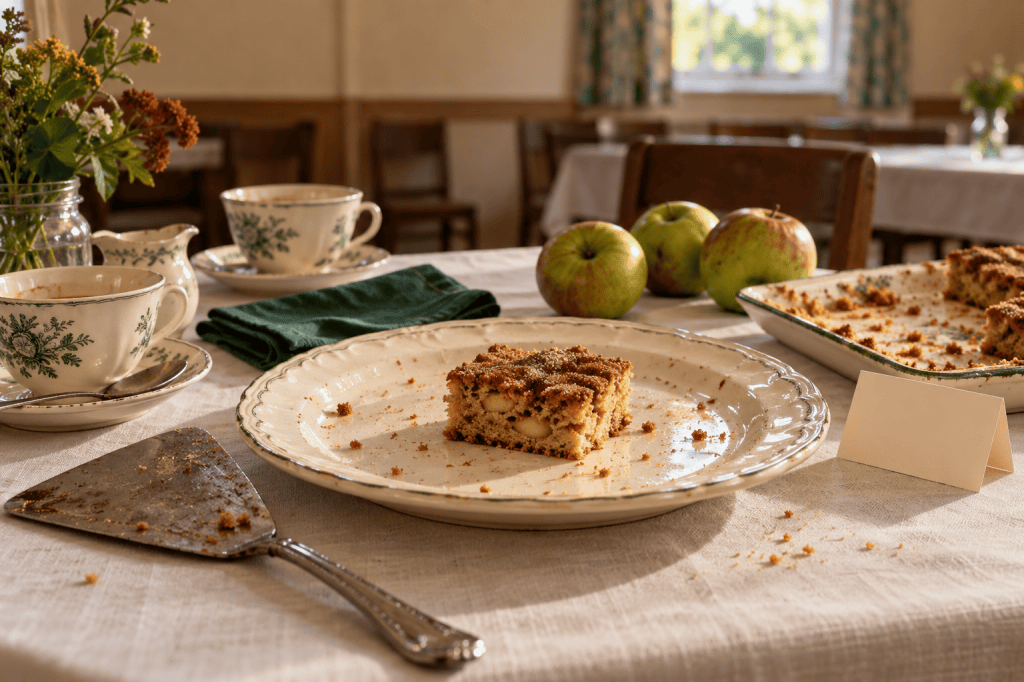
Accurate allergen labels matter at every church gathering, but particularly at an occasion centred upon health and healing.
Nobody should have to choose between declining all refreshments and conducting a detailed investigation in public.
Each plate should have its own clear label. Serving utensils should remain with the correct bake, and foods prepared for particular dietary requirements should be protected from cross-contamination.
It is better to state honestly what is known than to offer confident assurances unsupported by the ingredient packets.
Conversation at the table
A healing service does not grant permission to ask somebody what is wrong with them.
Some people will wish to talk. Others will not. A traybake may be offered without requiring a medical history in return.
Useful conversation may begin with:
- “Would you like tea or coffee?”
- “May I bring that to your seat?”
- “There is apple cake and lemon square.”
- “Would you like another piece for later?”
Less useful conversation includes unsolicited diagnoses, accounts of miraculous supplements and detailed comparisons with the illnesses of distant relatives.
Listening is sufficient. Silence may also be sufficient.
A piece for the road
Not everyone can remain for refreshments. Some may be tired after the service, dependent upon transport or simply ready to return home.
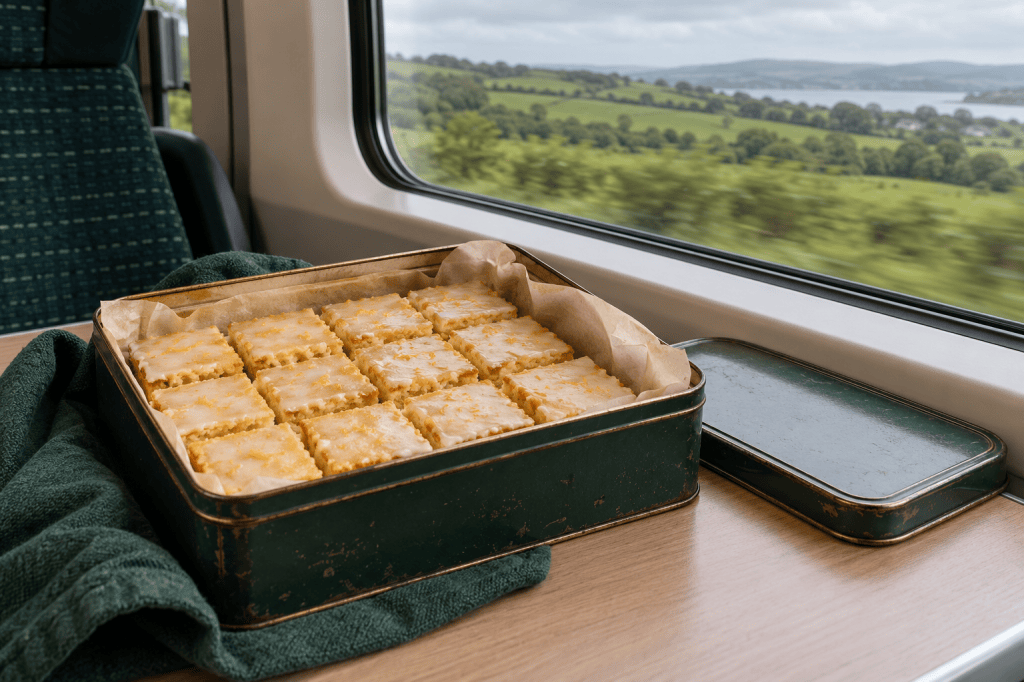
A few pieces packed in small containers can extend hospitality beyond the church hall. Labels should travel with them, particularly where allergens are concerned.
The person taking a piece home need not promise to eat it immediately, share it fairly or provide a report upon its condition. It is a gift, not a follow-up appointment.
The ministry continues
A traybake cannot cure illness. It should never be made to carry a claim so large.
It can, however, be part of a place in which somebody is received gently. It can accompany prayer, conversation, rest and the quiet recognition that every person remains more than a diagnosis.
St Luke tells of Christ meeting people in their need and restoring them to life within the community. The Church’s ministry of healing continues wherever people are prayed for, listened to, treated with dignity and given room at the table.
The square slice is a small thing.
Much of hospitality is.



Leave a Reply