Volume I, Number 3 — Autumn 2026
The quarterly newsletter of the Irish Ecclesiastical Traybake Society
From the Secretary’s Tin
Harvest is the season in which churches give thanks for abundance and then attempt to fit that abundance onto three trestle tables beside the font.
Apples appear in every available form. Loaves multiply. Someone brings an unexpectedly large marrow. The tea rota is expanded, additional chairs are found and the parish discovers once again that twelve people can produce refreshments for eighty provided nobody asks them too early how it will be done.
The traybake belongs naturally within this setting. It is made to be shared, travels with reasonable dignity and may be divided according to the size of the congregation or the optimism of the organiser.
This issue considers harvest hospitality, responsible allergen information, the ministry of washing-up and the unresolved theological significance of the last square.
Harvest Hospitality
A harvest table should appear generous without becoming unnavigable.
Variety is welcome, but organisers may wish to establish in advance whether six separate people are planning to bring apple cake. Such coordination does not suppress the Spirit. It merely permits the appearance of shortbread.
A useful harvest table might include:
- one or two plain cakes;
- a fruit-based traybake;
- a chocolate option;
- something without icing;
- clearly identified alternatives for particular dietary needs;
- sufficient napkins;
- a plate upon which serving utensils may be placed without adhering permanently to the tablecloth.
Portions should be modest where several kinds of baking are available. A guest may then sample more than one item without having to make a public declaration concerning appetite.
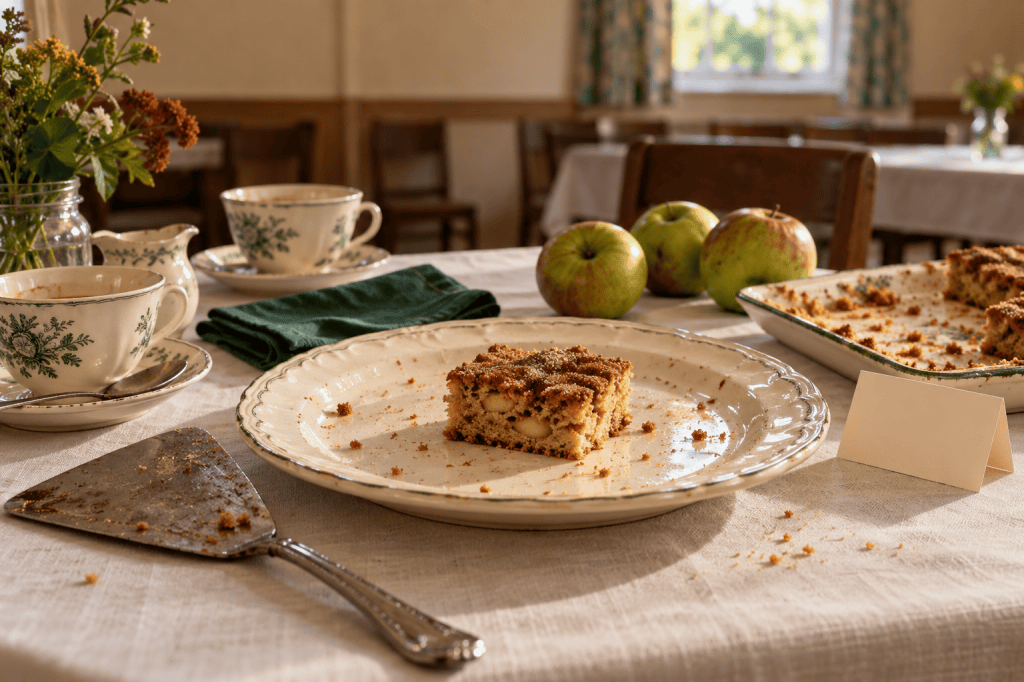
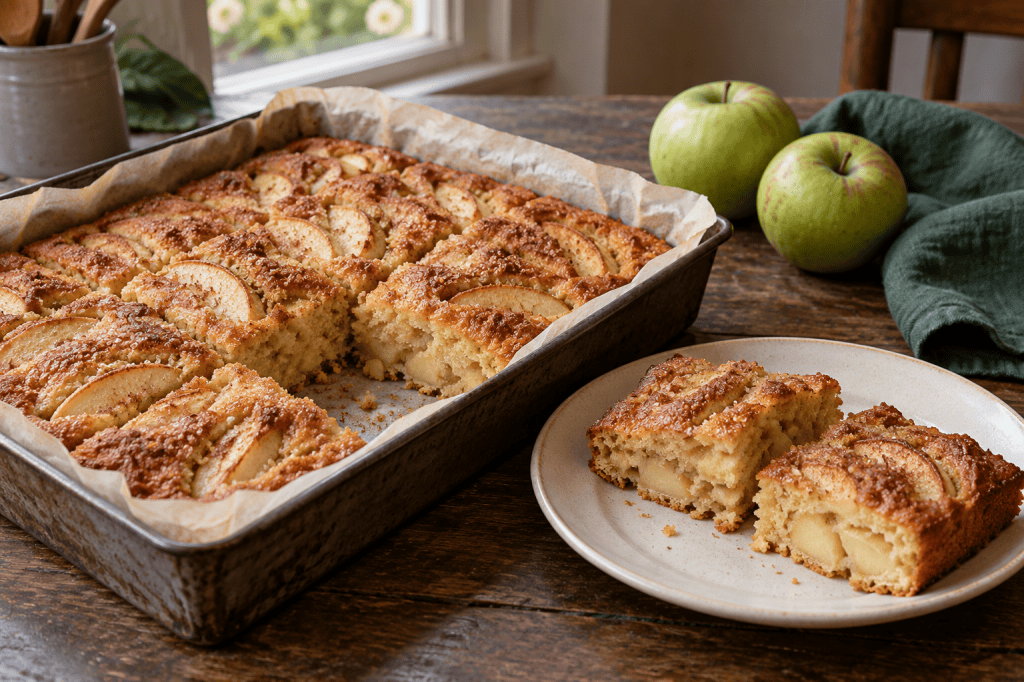
The Society’s provisional apple and cinnamon traybake is particularly suited to the season, although it remains under assessment and may not yet carry the IETS Approved stamp.
A Word About Labels
Good hospitality enables people to make informed and safe choices.
Every bake offered publicly should be accompanied by accurate allergen information. The person who made it is generally best placed to supply this and should write it down before the tin leaves home.
At minimum, identify clearly whether the bake contains:
- cereals containing gluten, including wheat;
- eggs;
- milk;
- peanuts;
- nuts;
- soya;
- sesame.
Other regulated allergens should also be declared where present. Ingredient packaging must be checked rather than relying upon memory or assumptions about what a product “normally” contains.
A simple label might read:
Apple and Cinnamon Traybake
Contains: wheat, milk and eggs
Made in a kitchen where nuts are also handled
Labels should remain beside the correct plate throughout serving. A card placed vaguely between two cakes is capable of creating more uncertainty than no card at all.
Separate serving utensils should be provided, particularly for foods intended for people with allergies or intolerances. A knife moved casually from a walnut slice to another bake carries more than crumbs.
Homemade food should not be described as “free from” a particular allergen unless the ingredients, preparation area and risk of cross-contamination have all been considered carefully. Confidence is not a substitute for accuracy.
The Order of the Table
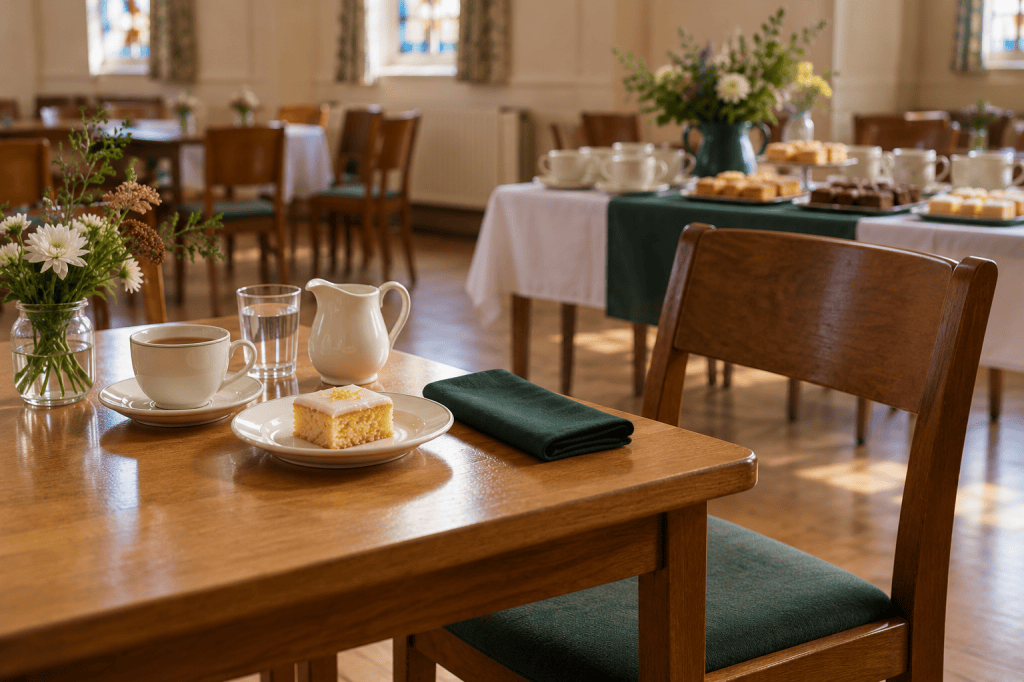
Although local custom will prevail, the Society recommends arranging refreshments in a sequence which can be understood without formal instruction.
Plates and napkins should come first. The bakes should follow. Tea and coffee are best placed separately, reducing the likelihood that somebody carrying a full cup will attempt to reach across the shortbread.
Allergen labels must remain visible after the first few portions have been removed. Decorative cloths should not fold over them, nor should the labels be used as temporary resting places for teaspoons.
The most structurally vulnerable bakes should be served with a cake slice. Firmer pieces may be lifted by hand, although a person who has already tested three varieties should not be permitted to reorganise the entire plate in search of a preferred corner.
The Ministry of Washing-Up
Every gathering eventually reaches the point at which hospitality becomes washing-up.
This work is often performed by the same small group who arranged the room, made the tea, supplied the cakes and knew where the bin bags were kept. The Society considers this concentration of knowledge pastorally unwise.
Before an event begins, somebody should know:
- where dirty dishes are to be placed;
- whether the hot-water supply is functioning;
- which cloths are intended for dishes and which for surfaces;
- where clean items belong;
- who has agreed to remain until the end.
Those who have baked should not automatically be expected to wash every plate upon which their baking was served. The contribution of a traybake does not constitute ordination to the sink.
Where a dishwasher is available, it should be loaded by somebody acquainted with its operation. Ten people offering contradictory advice from the doorway does not shorten the cycle.
Tins, plates and utensils brought from home should be identified. A small label beneath the item is preferable to the customary post-event exchange of messages asking who owns the rectangular container with the blue lid.
The Last Square
At almost every gathering, one square remains.
Several people look at it. Each would eat it. None wishes to appear to want it. Eventually somebody cuts it in half, thereby creating two smaller last squares and postponing the question.
This ritual has considerable theological depth.
The last square stands at the meeting point of generosity, restraint, desire and the fear of being observed. It is wanted, yet left. It is offered, yet not taken. Its continued presence allows everyone to believe that nobody has been deprived.
The Society has considered whether a formal rule is required.
Its provisional determination is as follows:
- The last whole square may be offered once around the table.
- If declined, it may be divided into two.
- One half should then be eaten by the person who divided it.
- Further subdivision is discouraged.
- A piece smaller than a reasonable mouthful ceases to demonstrate generosity and becomes abandoned evidence.
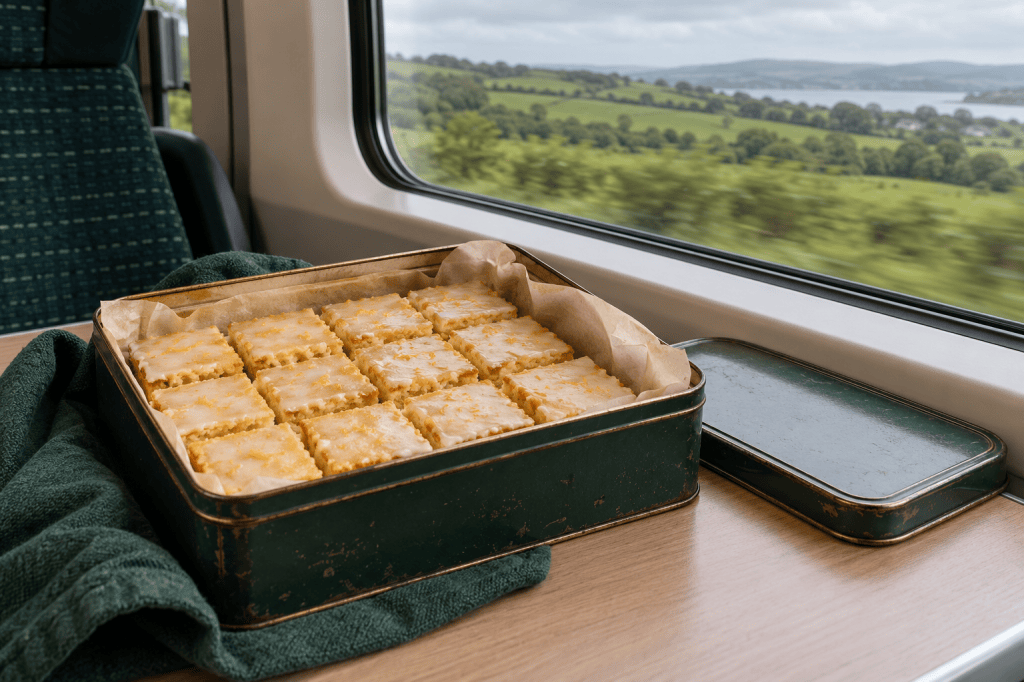
Alternatively, the final square may be placed in a clean container and sent home with the organist, caretaker or person who stayed to do the washing-up.
This is not favouritism. It is distributive justice.
Reports from the Field
The Society continues to welcome accounts of regional traybake customs, inherited recipes and biscuit tins of proven service.
Particular interest attaches to harvest recipes which use apples, oats, ginger or other ingredients associated with the season. Submissions should include clear measurements, tin dimensions and any knowledge concerning storage and transport.
Statements such as “bake until done” and “add enough flour” may accurately represent family tradition, but require further interpretation before publication.
The Winter Issue
The winter issue of The Ecclesiastical Crumb will consider festive baking, the return of borrowed tins and the question of how early a traybake may properly contain cranberries.
Until then, may your harvest tables be generous, your labels remain beside the correct plates and somebody else volunteer for the tea towels.



Leave a Reply