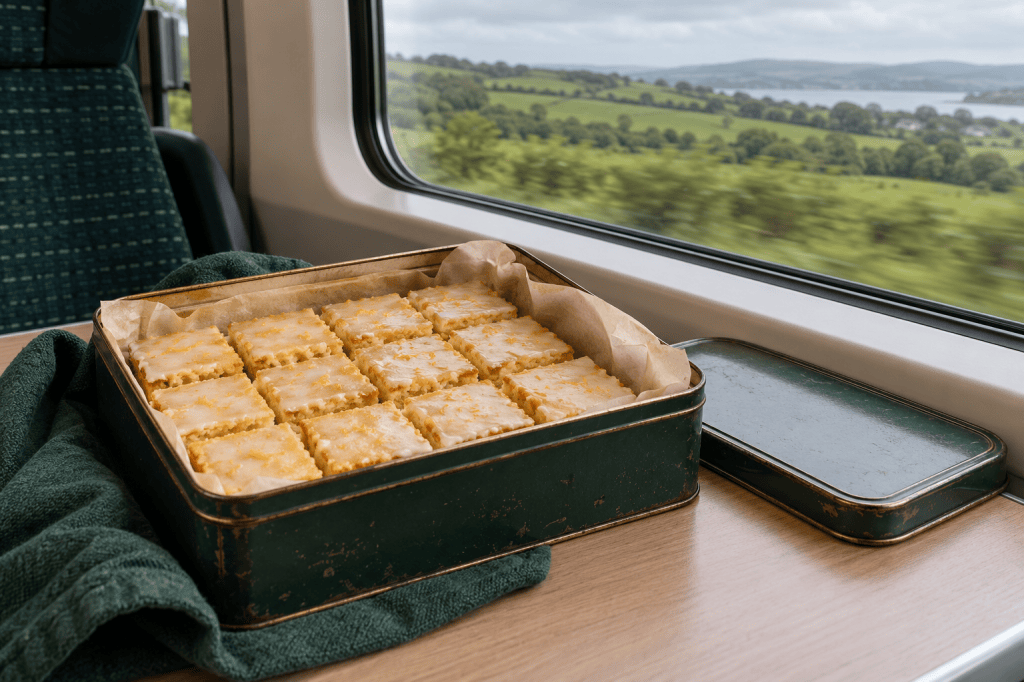
A traybake in the kitchen is a domestic achievement. A traybake arriving intact at a church hall three parishes away is a logistical one.
Many otherwise excellent bakes have suffered in transit. Icing has transferred itself to lids. Carefully separated layers have reunited. Coconut has escaped into the upholstery. One corner piece has disappeared under circumstances which nobody in the front passenger seat can adequately explain.
The Irish Ecclesiastical Traybake Society therefore offers the following guidance for the safe conveyance of baked goods by car, train or determined parishioner.
Choose with the journey in mind
Not every traybake is called to a travelling ministry.
Firmly set squares, shortbread-based slices, flapjacks and un-iced cakes generally travel well. Soft buttercream, unset chocolate and elaborate toppings require greater care. Refrigerator bakes may travel successfully, but only when kept properly chilled.
Before choosing a recipe, consider:
- the likely length of the journey;
- the weather;
- whether refrigeration will be available on arrival;
- how far the bake must be carried by hand;
- the condition of the road;
- whether the driver regards corners as a personal challenge.
A modest bake arriving intact will contribute more to the occasion than an ambitious one requiring pastoral reconstruction.
Cool it completely
A traybake must be completely cold before it is covered.
Warm cake produces condensation. Condensation softens crusts, loosens icing and encourages paper coverings to adhere themselves permanently to the surface. A bake which feels only slightly warm at the centre is still warm enough to cause trouble.
Allow generous cooling time. Where possible, bake the previous evening and leave any cutting, glazing or final decoration until the cake has settled.
Chocolate coverings and firm glazes should be fully set before the lid is introduced. “Nearly set” is a phrase responsible for a considerable amount of avoidable damage.
To cut or not to cut
Whether a traybake should be cut before travelling depends upon its character.
Cut in advance when:
- the bake is firm and unlikely to crumble;
- portions need to be wrapped separately;
- time or suitable knives may be unavailable at the destination;
- a precise number of pieces has been promised.
Travel whole when:
- the surface may shift or crack;
- the bake is particularly soft;
- the edges are vulnerable to drying;
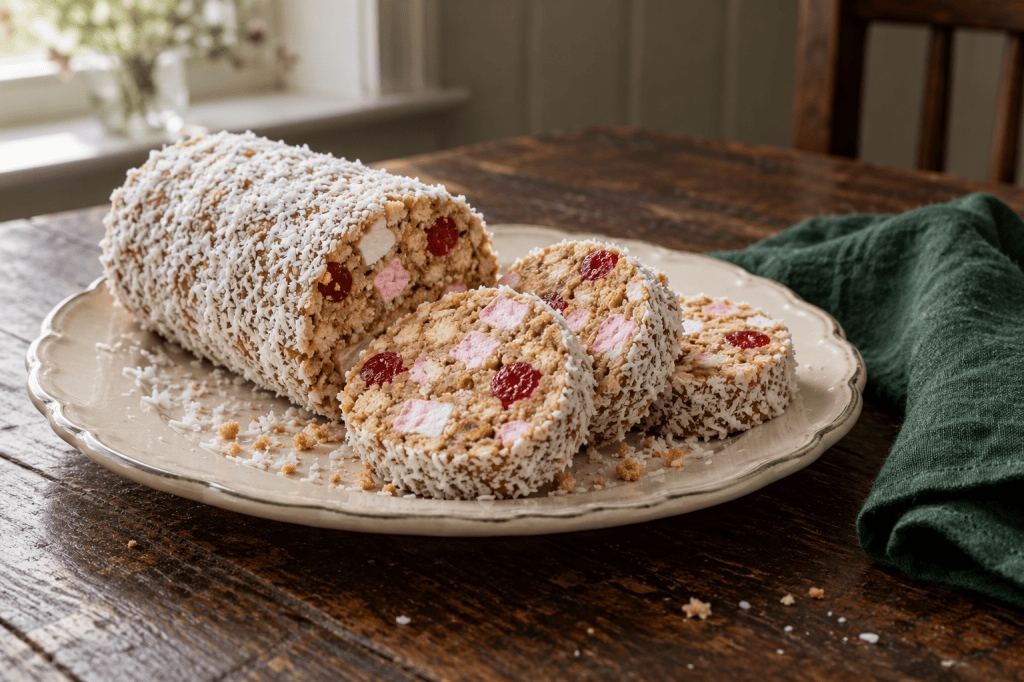
- Fifteens or another chilled log can be sliced more neatly on arrival;
- there is reason to suspect that the number of portions may diminish during the journey.
If cutting beforehand, allow the bake to settle first and use a clean, sharp knife. Pieces should be arranged closely enough to support one another, but not so closely that they become a single object again.
The proper container
A rigid, flat-bottomed container with a secure lid is the preferred vessel.
The container should be only slightly larger than the bake. Excess space permits movement, while an undersized tin invites compression and theological language.
Where a gap remains, folded parchment may be used to prevent sliding. Avoid placing loose kitchen paper directly against icing, chocolate or sticky surfaces.
Cardboard bakery boxes are suitable for short, level journeys in dry weather. They are less dependable in rain, on public transport or beneath other items whose owners have assured you they are “not very heavy”.
A serving plate covered with cling film is not a transport system. It is an expression of hope.
On stacking
Traybakes should be stacked only when their construction permits it.
Use parchment between firm, dry layers. Do not stack glazed, iced or chocolate-topped pieces directly upon one another. If multiple varieties share a container, consider whether flavours, toppings or allergens may transfer between them.
The Society advises against placing a tin of dense fruit squares on top of a box of lightly iced sponge. The relative spiritual merit of the two bakes does not alter the laws of pressure.
Travel by car
Place the container on a flat surface, preferably the floor of the car or a level section of the boot. A folded tea towel or non-slip mat beneath it will reduce movement.
Seats are deceptively sloped. A tin placed upon one may appear secure until the first roundabout.
Keep bakes away from direct sunlight and heating vents. Chilled items should travel in an insulated bag with suitable cold packs and should not be left in a parked vehicle.
The passenger holding the traybake should use both hands and should not simultaneously manage coffee, directions, a handbag and the parish raffle float.
Travel by train
Train travel requires a container which can be carried comfortably and kept level.
A shallow tin placed inside a strong, flat-bottomed bag is generally preferable to a wide box carried openly. The lid should fasten securely enough to withstand stairs, ticket barriers and an unexpected change of platform.
Keep the bake with you rather than placing it in an overhead rack, where it may be tilted, compressed by luggage or carried onward to Cork without you.
If a seat is available, the container may rest upon the table or floor. It should not occupy a neighbouring seat when the train is busy, however distinguished its contents.
Travel on foot
For short journeys, a lidded tin carried close to the body is usually sufficient.
Use two hands where possible. Walk at a measured pace. Avoid swinging the container, greeting acquaintances with excessive animation or attempting to unlock doors while balancing it upon one forearm.
Rain introduces additional considerations. Even a well-covered bake deserves a waterproof outer bag, particularly where cardboard packaging has been employed.
A small travelling kit
The experienced bearer may wish to carry:
- a sharp knife;
- a small roll of baking parchment;
- kitchen paper;
- a serving slice;
- spare labels;
- adhesive tape;
- allergen information;
- a clean cloth;
- the address of the venue.
These items will not prevent every difficulty, but they permit several forms of recovery without requiring access to the churchwarden’s cupboard.
Upon arrival
Place the bake on a stable surface and inspect it quietly before public display.
Minor movement may be corrected. Escaped coconut may be gathered. A shifted row of slices may be returned to order. Where damage is more serious, pieces can sometimes be rearranged upon a plate and described as “rustically presented”.
Check that allergen information remains with the correct bake. Refrigerated items should be returned to suitable cold storage promptly.
Only after these matters have been attended to should the bearer accept tea.
The governing principle
A traybake should arrive recognisably related to the traybake which departed.
This requires no specialised equipment. It requires only complete cooling, a suitable container, a level journey and the refusal to place three hymn books on top of it because there appeared to be room in the bag.
Transportation is not an afterthought. It is the final stage of the recipe.



Leave a Reply