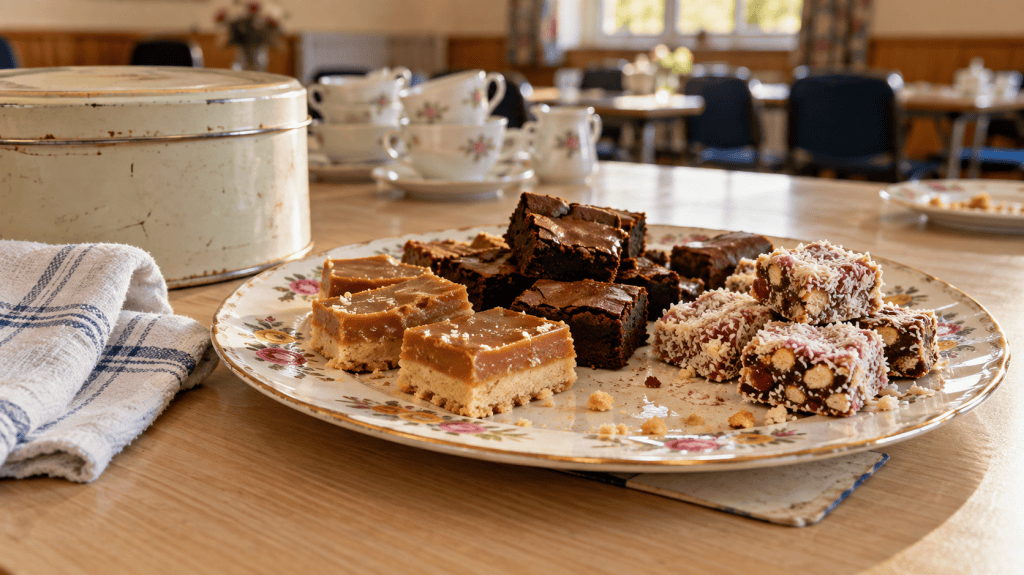
Every parish has good plates.
They aren’t necessarily the most expensive plates, or even the most attractive. A good plate is simply one trusted to carry something worth sharing. It is large enough for a respectable arrangement of traybakes, strong enough to survive the journey to the hall and distinctive enough that its owner might reasonably hope to see it again.
Good plates appear after Sunday worship, at harvest suppers, parish sales, funeral teas, and meetings where refreshments were described as unnecessary until someone brought them anyway.
Some have floral borders. Some are plain white. Some belong to dinner services which have gradually diminished through decades of ecclesiastical use. Others were acquired specifically because nobody would be greatly distressed if they failed to return.
The experienced contributor turns the plate over before leaving home and considers whether the owner’s name remains legible beneath it.
More Than Something to Carry Cake
A plate of traybakes is rarely announced as an act of ministry.
It arrives quietly. Somebody has bought the ingredients, made the mixture, waited for it to cool, cut it into portions and arranged it carefully. The plate is covered, transported and placed upon a table before anyone asks who brought it.
Later, people gather around it.
They talk while choosing a piece. They notice what somebody else has taken. They ask for the recipe. They return for another when they believe sufficient time has passed. News is exchanged, visitors are welcomed, and conversations continue which might have ended at the church door.
The plate gives them a reason to stay.
That is no small thing.
The Plate Which Travels
A good plate may serve several generations of parish life.
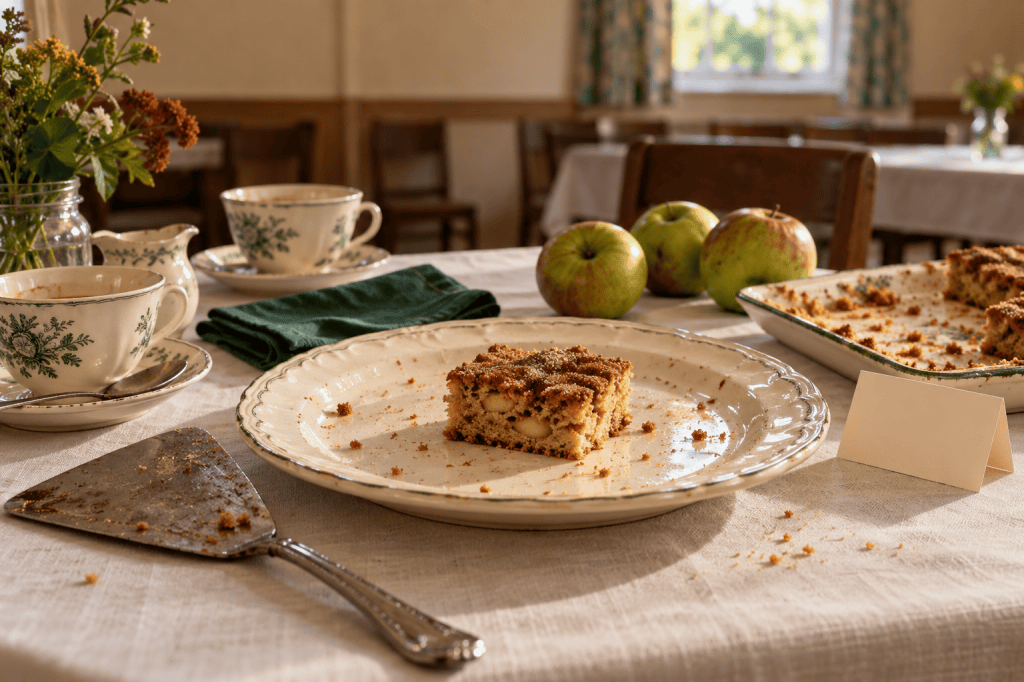
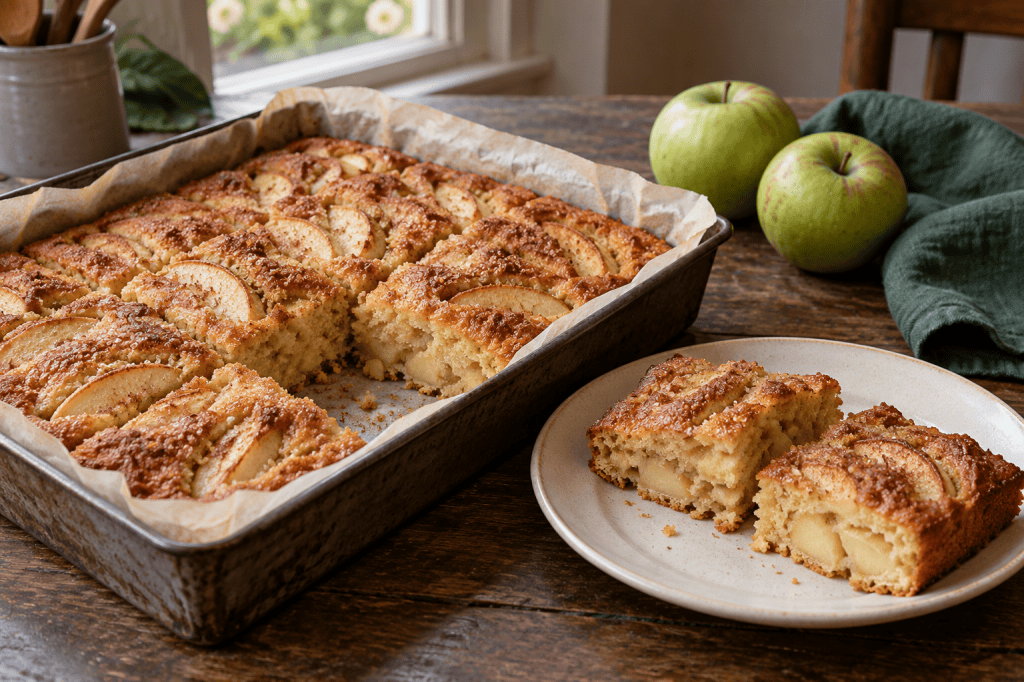
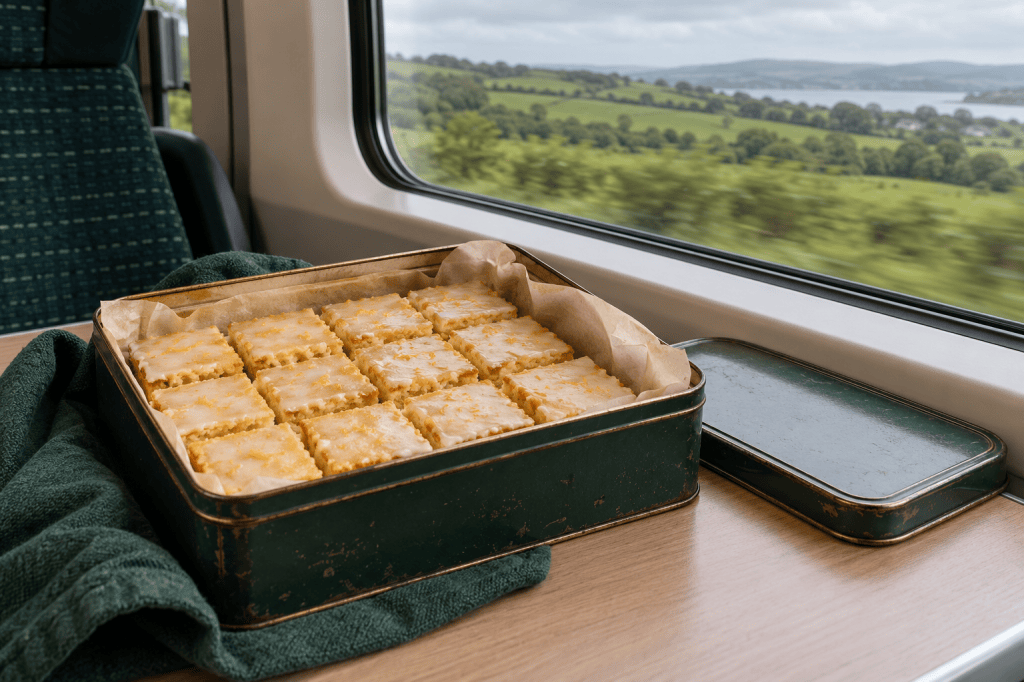
It carries caramel squares to a schoolroom, Fifteens to a sale, sandwiches to a wake and apple traybake to a harvest supper. It may sit in a rectory kitchen, end up in the wrong cupboard, or be taken home by someone who intends to return it next Sunday.
Sometimes it travels farther than expected.
Some plates’ movements cannot now be reconstructed from the surviving evidence. A person may recognise one years later at a diocesan gathering but decide that the circumstances do not favour immediate recovery. Another plate may return bearing something entirely different from what it left with.
This is part of the informal economy of church hospitality. Plates circulate. Tins migrate. Teaspoons enter new phases of ministry.
Remembering the Hands Behind It
The Irish Ecclesiastical Traybake Society is interested not only in recipes but in the people, objects and customs surrounding them.
A handwritten recipe matters because somebody kept making it. A battered tin matters because it has travelled to countless gatherings. A familiar plate matters because people recognise what usually arrives upon it.
These ordinary things carry memory.
We would therefore like to hear about the good plates in your church, family or community. Tell us what they look like, where they have travelled and what is traditionally served upon them.
Photographic evidence may assist with identification.
The Society cannot guarantee the return of missing crockery, but pastoral support remains available after a good plate has disappeared without explanation.


Leave a Reply